
Chattooga County Arrest Records and Charges
Chattooga County arrest records start with law enforcement and jail custody. The Sheriff's Office and jail handle booking, custody, bond, and inmate location questions. The court charge record starts later, when a prosecutor files an accusation, indictment, complaint, citation, or other charging paper with a court. The first booking charge may match the later court charge, but it may also be amended, reduced, dropped, or replaced after review.
The local record path is split across offices. The Chattooga inmate information portal is the researched online custody tool for current inmates, last-24-hour bookings, booking-date searches, and prior-inmate filtering. The Chattooga County Sheriff's Office is the law-enforcement channel. The Clerk of Superior Court keeps Superior, State, and Juvenile court files, while Magistrate Court handles arrest and search warrants plus preliminary hearings. The full filed case, disposition, and sentence belong in Chattooga County criminal court records.
Do not treat an arrest as a conviction. An arrest shows that a person was taken into custody or booked. A charge shows what the state alleges. A conviction only appears after a guilty plea, guilty verdict, or other conviction entry. Exact bond should be confirmed by phone with the jail because the sheriff FAQ directs callers to the jail number for inmate location and exact bond.
The OffenderIndex Chattooga roster is the researched custody portal for current inmates, recent bookings, and booking-date searches.
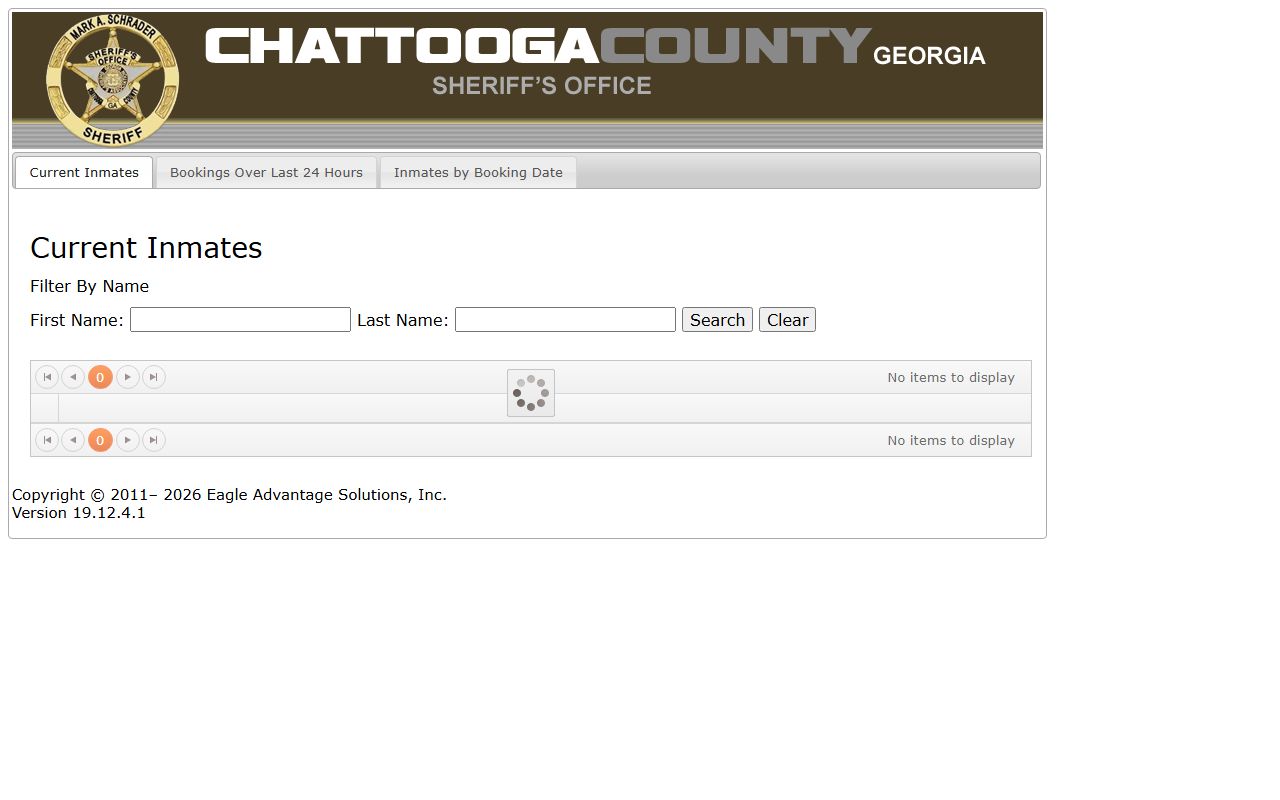
Use the roster for jail status, then use the court and prosecutor channels to confirm whether formal charges have been filed.
Find Chattooga County Arrest Records
The most reliable search path follows the event from custody to court. If the person may still be in jail, start with the roster or call the jail. If the question is about the formal charge, check the court case path through PeachCourt, LMJC calendars, the Clerk of Superior Court, Magistrate Court, or the municipal court that issued the citation. If the charge is felony-level, the Lookout Mountain Judicial Circuit District Attorney is the prosecutor channel identified in the research.
- Search the county roster for current inmates, last-24-hour bookings, or a booking-date range.
- Call 706-857-0721 to confirm inmate location and exact bond when custody or bond is the issue.
- Check Magistrate Court for arrest warrants, search warrants, preliminary hearings, and certain minor criminal matters.
- Use PeachCourt, LMJC calendars, or the Clerk of Superior Court to find filed criminal charges and case status.
- Contact the DA for prosecution-side questions on felony charges, amended charges, pleas, or restriction requests.
Municipal cases require their own check. Summerville or Trion traffic and ordinance matters may stay in city court, and a city bench warrant may not appear in the county Superior or State Court path. For sentenced offenders who have left county jail, use the GDC offender search. For registered sex offender status, use the GBI registry, which is separate from both the jail roster and the court charge record.
The Chattooga sheriff app-style website is an official sheriff-branded mobile channel and promotes the MySheriff app experience.
The research did not verify app-only charge search features, so use it as a sheriff mobile access point rather than a substitute for the court record.
Chattooga Court Charges After Arrest
Charges after arrest become court records through a filing. The research names felony indictments and accusations in Superior Court records, misdemeanor accusations in State Court or local misdemeanor channels, citations for traffic crimes, and Magistrate Court warrant and preliminary-hearing records. The District Attorney represents the people of Georgia in state crimes for the Lookout Mountain Judicial Circuit and prosecutes felony cases in Chattooga County. The prosecutor's decision can narrow or change what first appeared at booking.
| Charging Document | Who Uses It | What It Means in the Record |
|---|---|---|
| Complaint | Officer, prosecutor, or court channel depending on case type | An initial criminal allegation or sworn basis for action, often tied to early case or warrant activity. |
| Accusation or Information | Prosecutor | A formal prosecutor-filed charge, common for many state criminal matters. |
| Indictment | Grand jury | A formal felony charging document that moves a serious case into Superior Court prosecution. |
One arrest can produce several separate charges. Each charge should be checked for the court, case number, offense label, status, disposition, and sentence. The docket matters because a charge can remain pending while another charge is dismissed or resolved by plea.
The sheriff FAQ page gives the researched instruction to call the jail for an inmate and exact bond.
That phone confirmation is important because bond information can change faster than a public booking or charge display.
Chattooga County Charge Status
Charge status tells the reader where the accusation stands. A pending charge is unresolved. An amended or reduced charge means the filed allegation changed. A dismissed charge is no longer being pursued in that case. Nolle prosequi means the prosecutor decided not to proceed on that charge. A disposed charge has reached an outcome, but the outcome still needs to be read carefully.
| Status | What It Means | Where to Confirm |
|---|---|---|
| Pending | The charge remains open and no final outcome is shown. | Court docket, clerk, prosecutor, or current calendar. |
| Amended or Reduced | The charge was changed from the original allegation. | Charging paper, docket entry, plea form, or disposition order. |
| Dismissed | The court record shows the charge was dismissed. | Disposition entry or dismissal order. |
| Nolle Prosequi | The prosecutor chose not to proceed on the charge. | DA action or court docket entry. |
| Convicted | The record shows a guilty plea, guilty verdict, or conviction entry. | Disposition and sentencing order. |
Note: A jail booking entry is not enough to prove a final court outcome.
Charge Versus Conviction
A charge and a conviction answer different questions. The charge answers what the state alleged after arrest. The conviction answers whether the court record ended with guilt. Background checks, licensing reviews, housing reviews, and personal record checks can treat these differently, so a reader should not stop at the arrest record.
| Point | Charge | Conviction |
|---|---|---|
| Timing | Early or mid-case allegation. | Final or near-final court outcome. |
| Proof | Not proof of guilt. | Entered after plea, verdict, or judgment. |
| Where Seen | Booking, warrant, accusation, indictment, docket. | Disposition, sentence, probation, fines, or judgment entries. |
| Can Change | May be amended, reduced, dropped, or dismissed. | May be appealed, corrected, restricted, or modified only through legal process. |
The GDC Chattooga County Jail page confirms the jail location and jail phone listed for county custody.
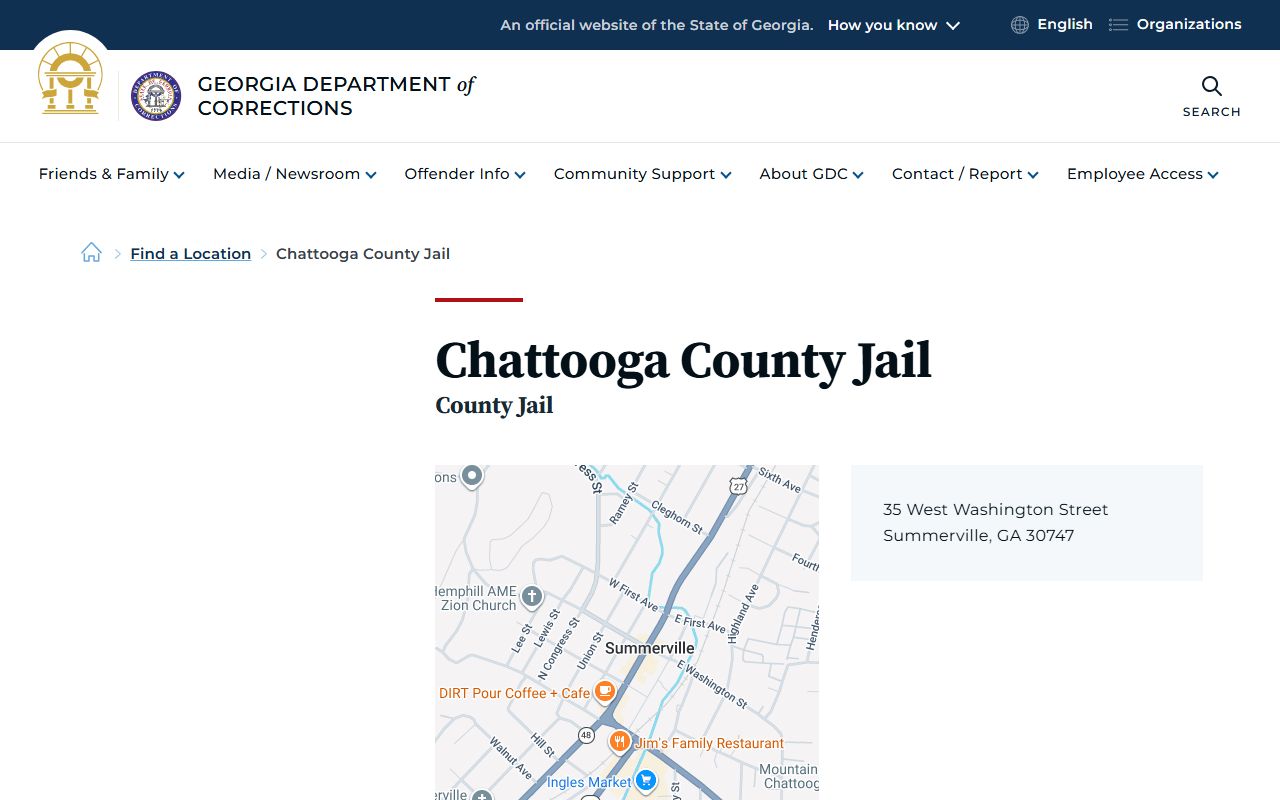
That state listing is a useful cross-check for the county jail address, but county inmates are still searched through the county roster and jail contact path.
Chattooga Arrest Record Access Channels
The access channel depends on the question. For custody, call the jail or use the roster. For booking reports or law-enforcement records not on the roster, use the sheriff and open-records process, subject to exemptions. For warrants and preliminary hearings, contact Magistrate Court. For felony case filings and certified court copies, contact the Clerk of Superior Court. For prosecution decisions, contact the DA. For state prison status, use GDC. For sex offender registry information, use GBI.
Sheriff and Jail
35 W Washington Street
Summerville, GA 30747
Sheriff 706-857-3411
Jail and exact bond 706-857-0721
Magistrate Court
120 Cox Street, Suite C
Summerville, GA 30747
706-857-0711
9:00 a.m. to 5:00 p.m. Monday-Friday
District Attorney
114 E. Patton Street, P.O. Box 1025
LaFayette, GA 30728
706-638-2121
lmjcda@pacga.org
Chief Magistrate Tracy L. Maddux is the researched local official for Magistrate Court, which has jurisdiction over arrest and search warrants, preliminary hearings, summonses, bad checks, county ordinance violations, and certain minor criminal matters. Magistrate Court can be the first court record stop before a case moves to Superior or State Court.
The GDC offender search is the state-prison search path for sentenced offenders who have left county jail.
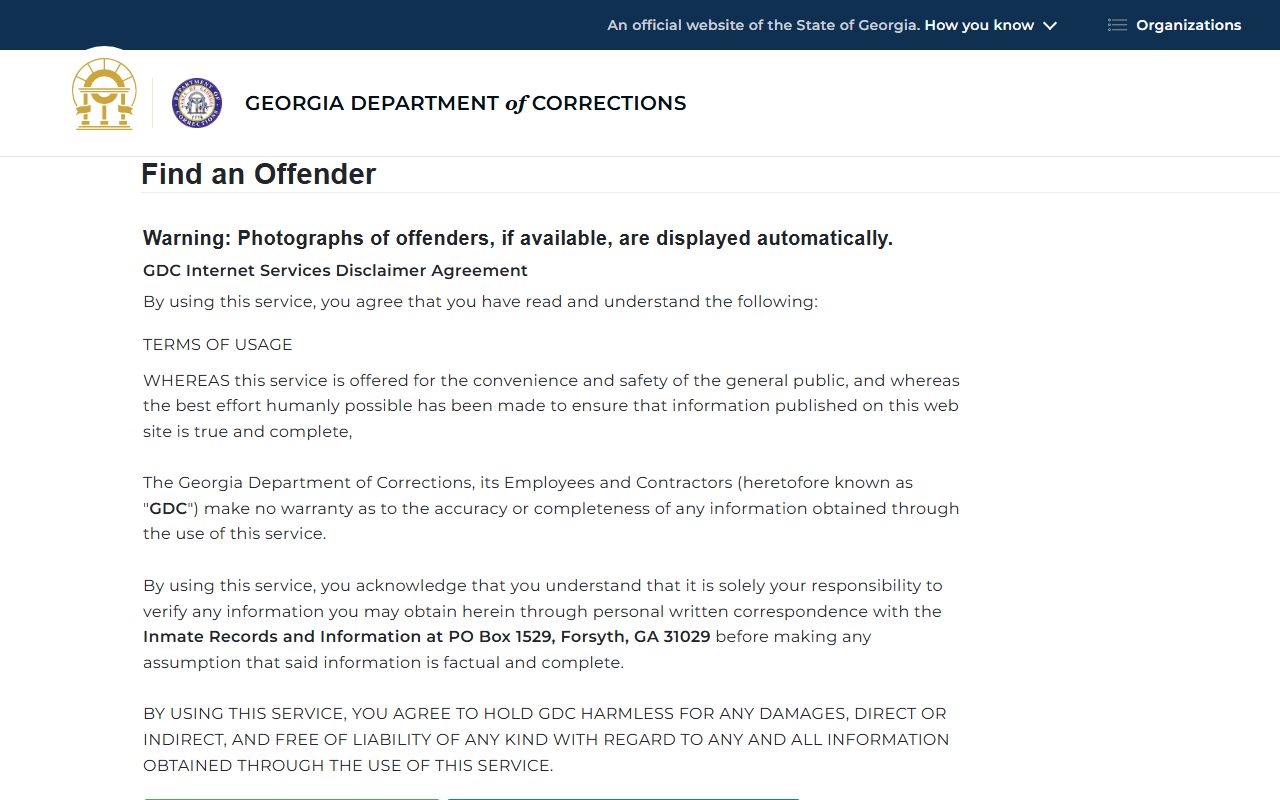
Use GDC for state offender status, while county jail booking and exact bond remain local sheriff and jail questions.
Statewide Criminal History Checks
Statewide systems answer questions that local arrest records do not. The GBI criminal history record restrictions page explains Georgia's restriction process under O.C.G.A. 35-3-37. Arrests after July 1, 2013 use the prosecutor path for restriction, while older arrests use the arresting-agency application path. For Chattooga felony charges, that usually makes the Lookout Mountain Judicial Circuit District Attorney an important contact.
The GBI sex offender registry is not a jail roster and is not the same as a charge lookup. It is a central registry for registered sex offenders under Georgia law. GDC's search is also separate. Georgia.gov notes that GDC search covers state offenders and that county jail inmates require the county website. VINELink can help with custody-status notification, especially for victims or people tracking release status.
The Georgia.gov offender search explainer distinguishes state offender searches from county jail inmate searches.
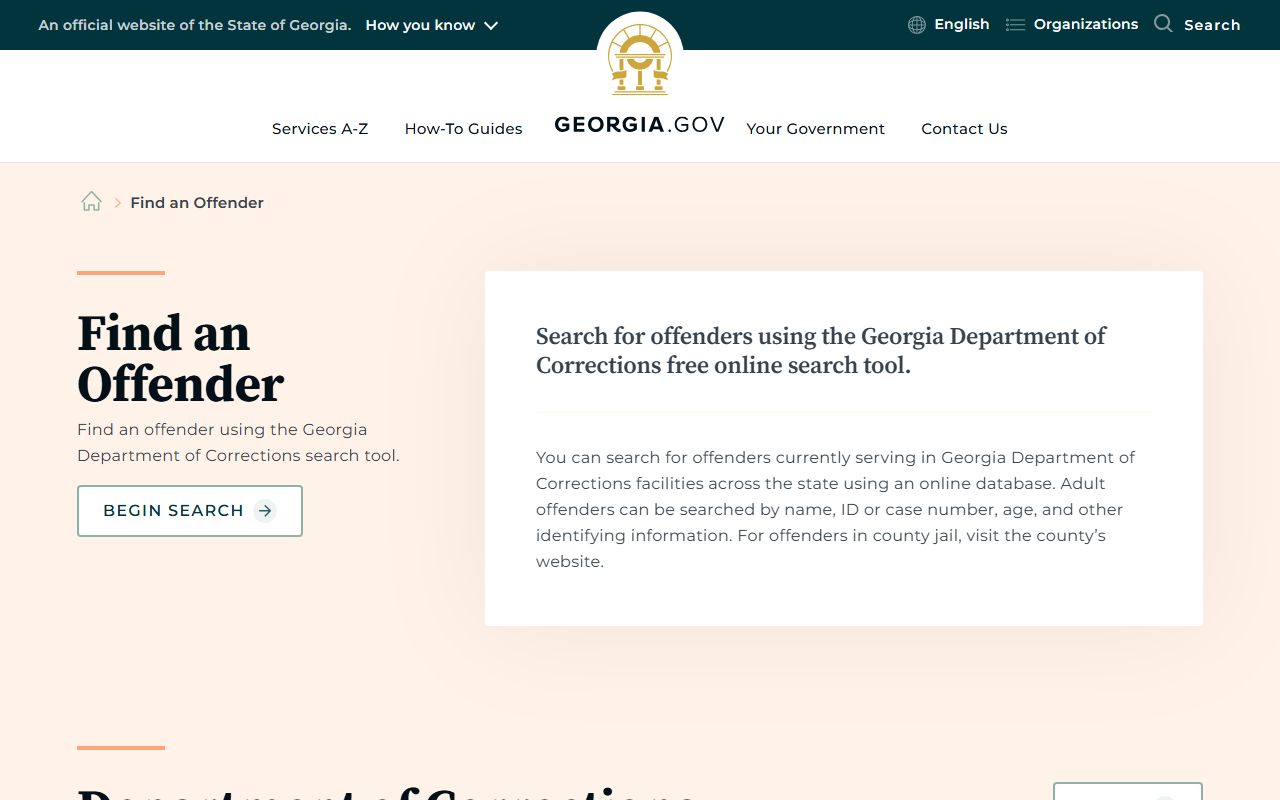
That distinction keeps a Chattooga arrest records search from mixing county custody, state prison, and formal court charges into one assumed database.
Restricted Chattooga Charge Records
Some arrest and charge records are not fully public. Juvenile matters are restricted. Sealed cases, active investigations, search warrant materials, victim data, protected addresses, medical information, and personal identifiers may be withheld or redacted. A dismissed charge may still exist in some court or criminal-history systems unless it is restricted through the proper Georgia process.
For administrative and law-enforcement records, the Georgia Open Records Act can be a fallback, but O.C.G.A. 50-18-72 allows certain records or parts of records to be withheld. For court case files, the clerk or court may require clerk-specific procedures, fees, identity proof, or a court order. For exact bond and current custody, call the jail rather than relying on a stale screenshot or copied booking entry.
Important: Arrest records and charge records are not proof of conviction; verify final outcomes with the originating court.