
No Official Online Active Warrant List Located
No official online active warrant search or public active-warrant list was located for Chattooga County in the researched sources. That gap is important. Readers should not treat third-party warrant websites as the county's official source, and they should not assume that the absence of a name on an unofficial site means there is no warrant. The official path is to contact the court or law-enforcement office connected to the warrant type.
Magistrate Court is the primary local court named by Chattooga County for arrest and search warrants. The official county page also lists Magistrate Court jurisdiction over preliminary hearings, summonses, bad checks or deposit-account fraud, certain minor criminal offenses, county ordinance violations, distress warrants, dispossessory writs, and civil claims of $15,000 or less. Chief Magistrate Tracy L. Maddux can grant bail in cases where bail is not reserved to another judge, and the sheriff handles warrant execution and jail booking or bond information.
The Chief Magistrate staff page documents Magistrate Court authority and Chief Magistrate Tracy L. Maddux's local role.
That Magistrate Court source is the strongest local starting point for warrant and preliminary-hearing questions because it names the court's jurisdiction directly.
Types of Warrants in Chattooga County
Warrant terminology matters because the access channel depends on the warrant. An arrest warrant and a search warrant are not the same as a bench warrant for missing court. A probation warrant may be tied to a criminal sentence and supervision status. A dispossessory writ or distress warrant from Magistrate Court can sound similar to a criminal warrant but may be part of a civil landlord-tenant or property process.
- Arrest warrant - issued on probable cause, often through Magistrate Court, and executed by law enforcement.
- Search warrant - authorizes a search of a place, person, or property and may remain confidential during an active investigation.
- Bench warrant - issued by a judge for failure to appear, failure to comply, contempt, or an unresolved court obligation.
- Probation warrant - tied to an alleged probation violation and often connected to Superior or State Court and probation supervision.
- Civil or dispossessory writ - handled by Magistrate Court for civil enforcement and not the same as a criminal arrest warrant.
How to Search Chattooga County Warrants
Because no official online active-warrant list was located, use a phone and office fallback chain. Magistrate Court can answer court-process questions about warrant and preliminary-hearing matters. The Sheriff's Office can route law-enforcement warrant and execution questions. The jail line is the researched number for confirming whether someone is in custody and the exact bond. The Clerk of Superior Court is the fallback for felony case dockets, bench warrants tied to Superior or State Court cases, and criminal case status. Municipal courts should be checked for city traffic or ordinance bench warrants, especially in Summerville or Trion.
- Call Magistrate Court at 706-857-0711 for warrant, preliminary-hearing, and Magistrate Court case questions.
- Call the Sheriff's Office at 706-857-3411 for law-enforcement routing or use 706-857-0901 for anonymous tips.
- Call the jail or bond number at 706-857-0721 if the person may already be in custody or if exact bond is needed.
- Call the Clerk of Superior Court at 706-857-0706 for Superior or State case status and bench-warrant context.
- Contact Summerville or Trion municipal court if the issue began as a city ticket or ordinance case.
- Use a sheriff open-records request only for releasable law-enforcement records; sealed, juvenile, and active investigative material may be withheld.
The Sheriff staff directory confirms Sheriff Mark A. Shrader, the sheriff address, phone, emergency number, and anonymous tip line.
The sheriff directory is the correct official source for warrant execution, anonymous tips, and law-enforcement contact routing, while court records still require the issuing court or clerk.
Chattooga County Warrant Fallback Fields
There is no documented official Chattooga warrant-search form with public fields. The table below lists the information to collect before calling the court, sheriff, jail, clerk, or municipal court. Providing these details helps staff distinguish people with similar names and connect the question to the correct court or case, but staff may still decline to release active, sealed, juvenile, or investigative information.
| Field Label | Type | Required | Notes |
|---|---|---|---|
| Full Name | Text | Yes | Use legal name and known aliases if relevant. |
| Date of Birth or Age | Date/Text | Helpful | May be needed to avoid mistaken identity. |
| Known Case Number | Text | No | Useful for clerk, Magistrate, Superior, State, or municipal court checks. |
| Issuing Court | Text | No | Magistrate, Superior, State, Probate, Juvenile, or Municipal if known. |
| Charge or Citation | Text | No | Helps distinguish criminal, traffic, ordinance, probation, or civil writ matters. |
| Approximate Date | Date/Text | No | Use arrest date, missed court date, citation date, or filing date if known. |
| Custody or Bond Status | Text | No | Call 706-857-0721 for inmate lookup and exact bond. |
Sample Warrant Field Inventory
If a court or sheriff record is releasable, a warrant record may contain identifying, court, charge, and status fields. The research did not open a live active-warrant result because no official Chattooga active-warrant list was located. The inventory below is limited to fields the research says may appear if obtained from a court or sheriff record.
| Field | What It Shows |
|---|---|
| Name | The person named in the warrant, if releasable. |
| Date of Birth or Age | Identity detail if public and not redacted. |
| Warrant Number | Identifier assigned to the warrant or court process. |
| Issuing Court | Magistrate, Superior, State, Municipal, or another court that issued the warrant. |
| Charge or Offense | Alleged offense, violation, contempt, failure to appear, or related case basis. |
| Statute | Legal citation if included in the record. |
| Case Number | Underlying court case number when tied to a filed case. |
| Bond Amount or Type | Bond figure or conditions if set and releasable; confirm exact bond by phone. |
| Date Issued | When the court issued the warrant. |
| Status | Active, served, recalled, quashed, cleared, sealed, or otherwise restricted if shown. |
| Agency | Law-enforcement agency connected to service or execution. |
| Court Date | Next hearing, first appearance, status date, or compliance date if provided. |
| Notes or Restrictions | Sealed, juvenile, investigative, protected-person, or nonpublic information limits. |
What to Do If You Have an Outstanding Warrant
Do not rely on an unofficial website to decide whether to appear, ignore a notice, or travel. Call the court connected to the case and ask about the case number, warrant type, bond, next appearance date, and whether counsel should contact the court before surrender. If the person is already in custody or a bond needs to be posted, call 706-857-0721 for the exact bond. If the issue is a municipal traffic or ordinance case, contact the municipal court rather than the county clerk alone.
Important: Active warrants can lead to arrest. Consider legal counsel before appearing or surrendering.
Sheriff Tips, Jail, and Open Records
The Sheriff's Office is listed at 35 W Washington Street, Summerville, GA 30747, with main phone 706-857-3411, emergency 911, and anonymous tips at 706-857-0901. The sheriff FAQ says to call 706-857-0721 to find an inmate or exact bond. Those numbers serve different purposes: the tip line is for anonymous law-enforcement information, the jail line is for custody or bond, and the main sheriff line is the public routing number for the office.
For non-confidential law-enforcement records, a public records or open-records request to the sheriff may be appropriate. Georgia's Open Records Act allows inspection and copying of public agency records unless an exemption applies, but O.C.G.A. 50-18-72 permits withholding or redaction for protected categories, and active investigative records, sealed warrants, juvenile matters, personal identifiers, and protected law-enforcement information may not be released. Court case files should still be requested from the court or clerk that maintains the case.
Restricted Chattooga County Warrant Records
Sealed warrants, search warrants connected to active investigations, juvenile warrants, protected victim information, certain probation material, and restricted criminal-history records may not be available through a public request. A bench warrant may appear in a court case docket, but the underlying file may still contain redactions. A search warrant may be confidential while investigators are still working. Juvenile access generally requires party, attorney, or court-order status.
The GBI record restriction page explains Georgia's criminal-history restriction process under O.C.G.A. 35-3-37.
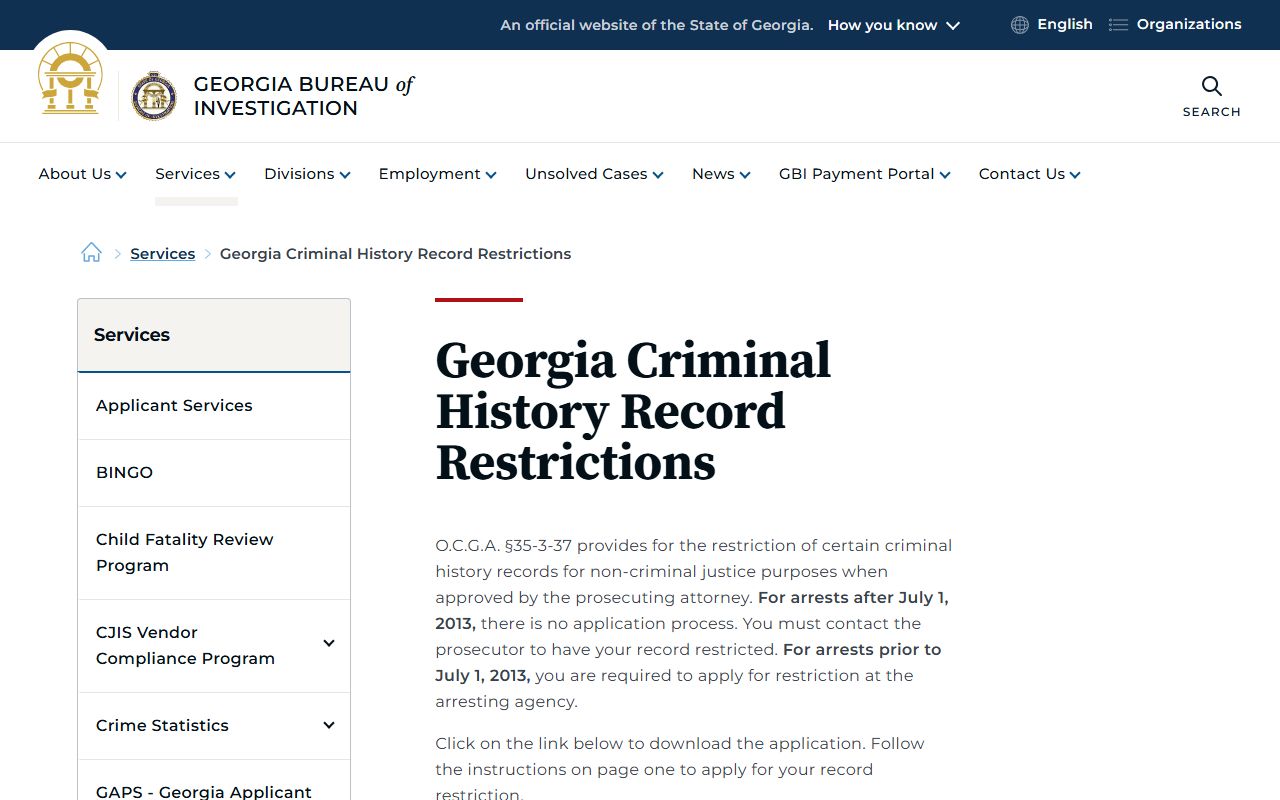
Record restriction is separate from clearing an active warrant: a person must resolve the warrant or case first, then follow the appropriate restriction path if eligible.