
Chattooga County Criminal Court Records
Criminal court records in Chattooga County begin as court records when a charging instrument reaches the proper court. The jail may show an arrest first, but the case file is the clerk-held record that tracks what happened in court. For Superior, State, and Juvenile clerk functions, the access point is the Clerk of Superior Court. GSCCCA identifies Kim Windle James as the Chattooga County Clerk of Superior Court and lists the office as managing Superior, State, and Juvenile court records. For felony criminal case files, the Superior Court channel is the main place to start.
Georgia's court structure matters. Superior Court handles felony cases and broad trial-court work. State Court can handle misdemeanor and traffic-type state-court matters when filed locally. Magistrate Court handles arrest and search warrants, preliminary hearings, summonses, certain minor criminal matters, bad checks, and county ordinance matters. Municipal courts in Summerville and Trion may hold city traffic or ordinance cases. For all court record types beyond criminal cases, use the broader Chattooga County court records path.
The Lookout Mountain Judicial Circuit Chattooga page connects local users to Superior Court information, circuit calendars, PeachCourt login, the District Attorney, Public Defender, Drug Court, Wellness Court, and local forms. That circuit link is useful when a Chattooga criminal court record has a hearing date, status conference, or calendar entry that must be checked against current circuit postings.
The LMJC District Attorney page shows the prosecutor channel tied to Chattooga criminal cases.
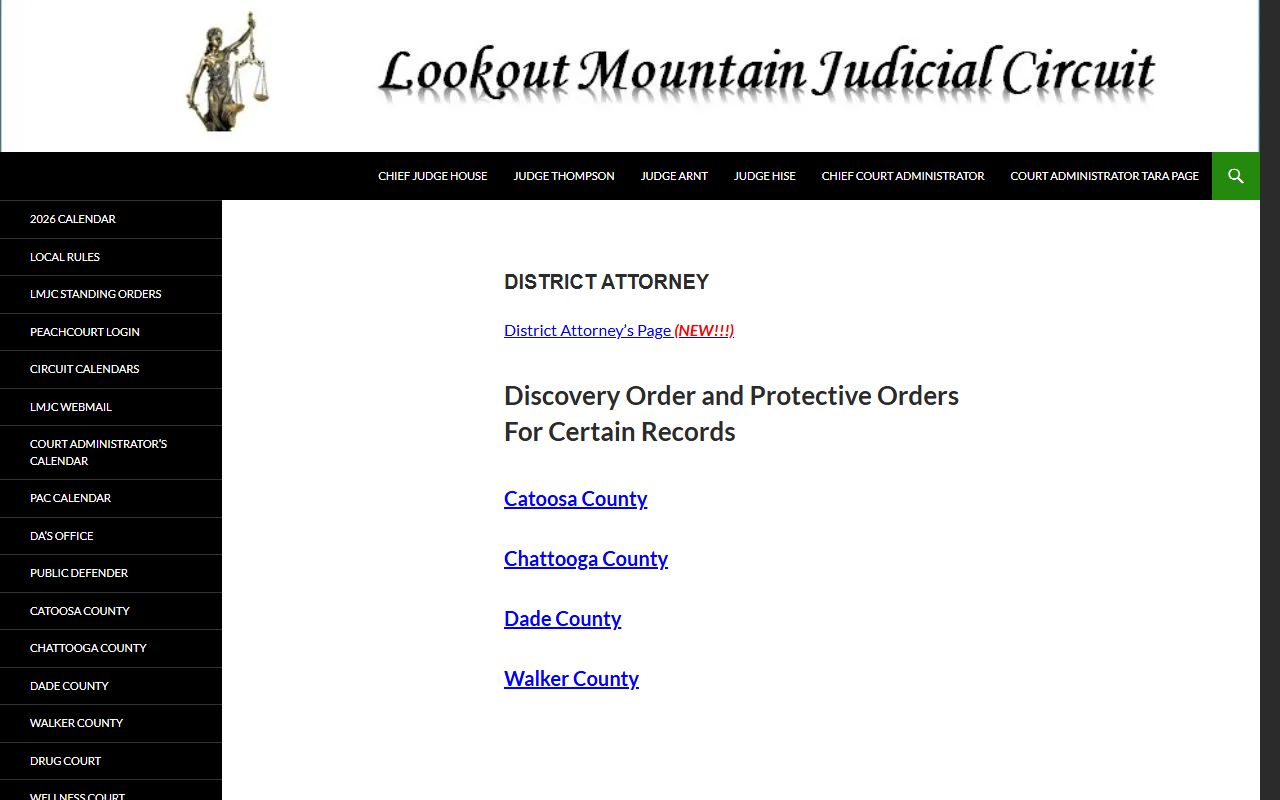
Use that channel for prosecution-side questions such as formal charges, plea offers, victim-witness routing, and record restriction requests that must go through the prosecutor.
Search Chattooga County Criminal Cases
There is no single official county page that guarantees every criminal case document is searchable without an account. The practical route is a layered search. Start with the local court level, then use PeachCourt for participating online document access, LMJC calendars for scheduled hearings, and the clerk counter for records not visible online. Georgia Courts' e-access page says users are redirected to provider websites and must have an account to search court records. The LMJC Chattooga page routes users to PeachCourt, which describes itself as Georgia's civil and criminal e-filing and document-access portal.
- Identify the court. Felony cases usually point to Superior Court, while misdemeanor, traffic, magistrate, or municipal matters may use another court.
- Check the LMJC Chattooga page for criminal status conference calendars, Judge Hise calendar material, and any updated circuit calendar instructions.
- Use a PeachCourt account for document access when the case or document is available through that provider.
- Call or visit the Clerk of Superior Court for case files, certified copies, older records, sealed-file questions, or documents not visible online.
- For warrant returns or preliminary-hearing records, check Magistrate Court, then follow any transfer to Superior or State Court.
Before calling the clerk, gather the defendant name, any case number, the approximate arrest or filing date, the court if known, and the charge name. If the file is sealed, restricted, juvenile, or older than the online system covers, the clerk may require in-person inspection, a written request, identity verification, certified-copy payment, or a court order.
The Lookout Mountain Judicial Circuit District Attorney website identifies the office as the prosecutor for state crimes in the circuit.

That office is part of the criminal record trail because felony charging decisions, plea negotiations, and some restriction requests run through the prosecutor rather than the clerk alone.
Chattooga County Criminal Case Flow
A criminal court record changes as the case moves. Early entries may show a warrant return, bond order, first court date, accusation, or indictment. Later entries may show arraignment, motions, calendar calls, plea forms, trial settings, verdicts, sentencing orders, restitution, probation, and revocation activity. A booking charge is not the same thing as a filed court charge. The related Chattooga County arrest records and court charges page focuses on the arrest-to-charge path, while this record is the full court case file.
Case flow: Charges Filed › Arraignment › Pretrial and Motions › Plea or Trial › Disposition › Sentencing.
| Stage | What the Criminal Court Record May Show |
|---|---|
| Charges Filed | Accusation, indictment, citation, complaint, returned warrant, case number, court, prosecutor, and defendant name. |
| Arraignment | Entry showing that charges were read and a plea was entered or scheduled. |
| Pretrial and Motions | Calendar calls, bond issues, discovery notices, motions, orders, continuances, and status conference entries. |
| Plea or Trial | Plea form, negotiated plea, jury or bench trial events, verdict, acquittal, mistrial, or dismissal. |
| Disposition and Sentencing | Final outcome, sentence, probation, fines, court costs, restitution, and later revocation or modification entries. |
LMJC also lists Drug Court and Wellness Court links. Those circuit programs can affect sentencing, compliance hearings, and later disposition history, but local eligibility is case-specific. The public docket may show a treatment-court event without exposing confidential treatment details.
The DA staff page lists Chattooga County office staff, including the local prosecutor and victim-witness staff named in the research.
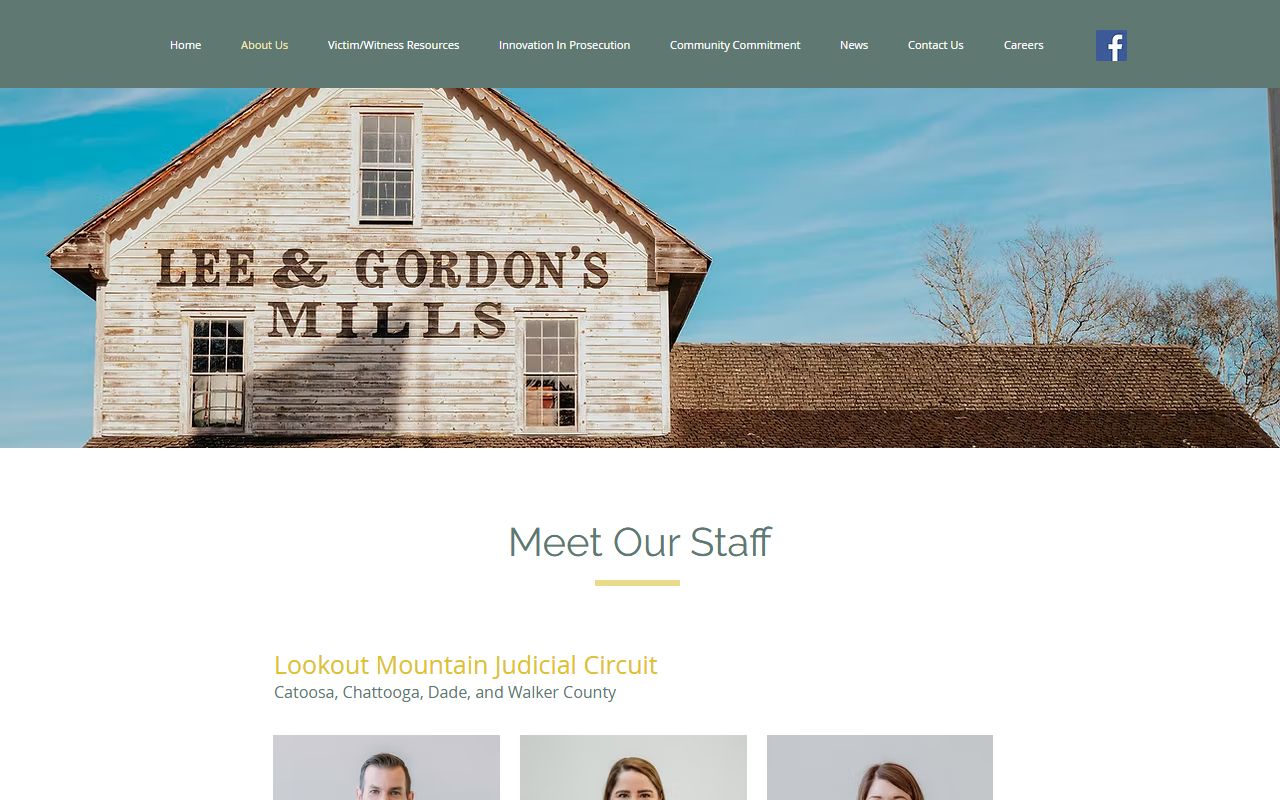
Staff routing can matter when a criminal case file shows a pending felony charge, victim-witness contact, or prosecutor-managed restriction request.
Chattooga County Criminal Record Fields
A Chattooga County criminal court record should be read field by field. The public view can be partial. Georgia court access may redact personal identifiers, minor names, protected addresses, victim information, medical or mental-health material, juvenile details, sealed filings, and restricted criminal history. When the online view is unclear, the Clerk of Superior Court is the better source for the official file and certified copies.
| Field | What It Shows |
|---|---|
| Case Number | The court-assigned identifier. The official Chattooga format was not located in the research. |
| Court | Superior, State, Magistrate, Juvenile, Probate, or Municipal, depending on case type and transfer history. |
| Parties | Usually State of Georgia against the defendant in a criminal case. |
| Charging Document | Accusation, indictment, complaint, citation, or returned warrant that starts the court case. |
| Docket Entries | Filings, hearings, arraignment, motions, orders, pleas, trial events, continuances, and sentencing entries. |
| Disposition | Outcome such as guilty, not guilty, dismissed, nolle prosequi, acquitted, transferred, or closed. |
| Sentence | Probation, confinement, fines, court costs, restitution, community conditions, or revocation events when entered. |
Note: Online case data should not be treated as a certified copy unless the clerk or provider marks it as certified.
Charges, Convictions, and Restrictions
A charge means the state has accused a person of an offense. A conviction means the case ended in a guilty verdict, guilty plea, or other conviction entry. Some charges are amended, reduced, dismissed, or nolle prossed. That is why criminal court records need the final disposition and sentence, not just the first charge list.
| Point | Charge | Conviction |
|---|---|---|
| Stage | Filed accusation, indictment, complaint, citation, or warrant return. | Final verdict, plea, or judgment entered by the court. |
| Meaning | An allegation that still may change. | A court outcome that can affect sentence, probation, and criminal history. |
| Record Use | Useful for tracking pending cases. | Needed to understand final criminal history and sentence. |
Georgia uses criminal history record restriction rather than a simple public label of expungement for many modern records. GBI explains that eligible records may be restricted under O.C.G.A. 35-3-37. For arrests after July 1, 2013, the person contacts the prosecutor for restriction. For older arrests, the person applies through the arresting agency. The DA path is important for Chattooga felony matters.
| Point | Sealed Record | Restricted Criminal History |
|---|---|---|
| Public View | Hidden from ordinary public inspection by court order or confidentiality rule. | Limited from non-criminal-justice public access if approved under Georgia law. |
| Who May Still See It | Court, parties, attorneys, or agencies allowed by order or law. | Criminal-justice agencies and judicial officials may still have access. |
| Where to Start | Ask the court or clerk that controls the file. | Use the prosecutor path for newer arrests or arresting-agency path for older arrests. |
The LMJC public defender page routes criminal defendants to adult and juvenile public defender application information.
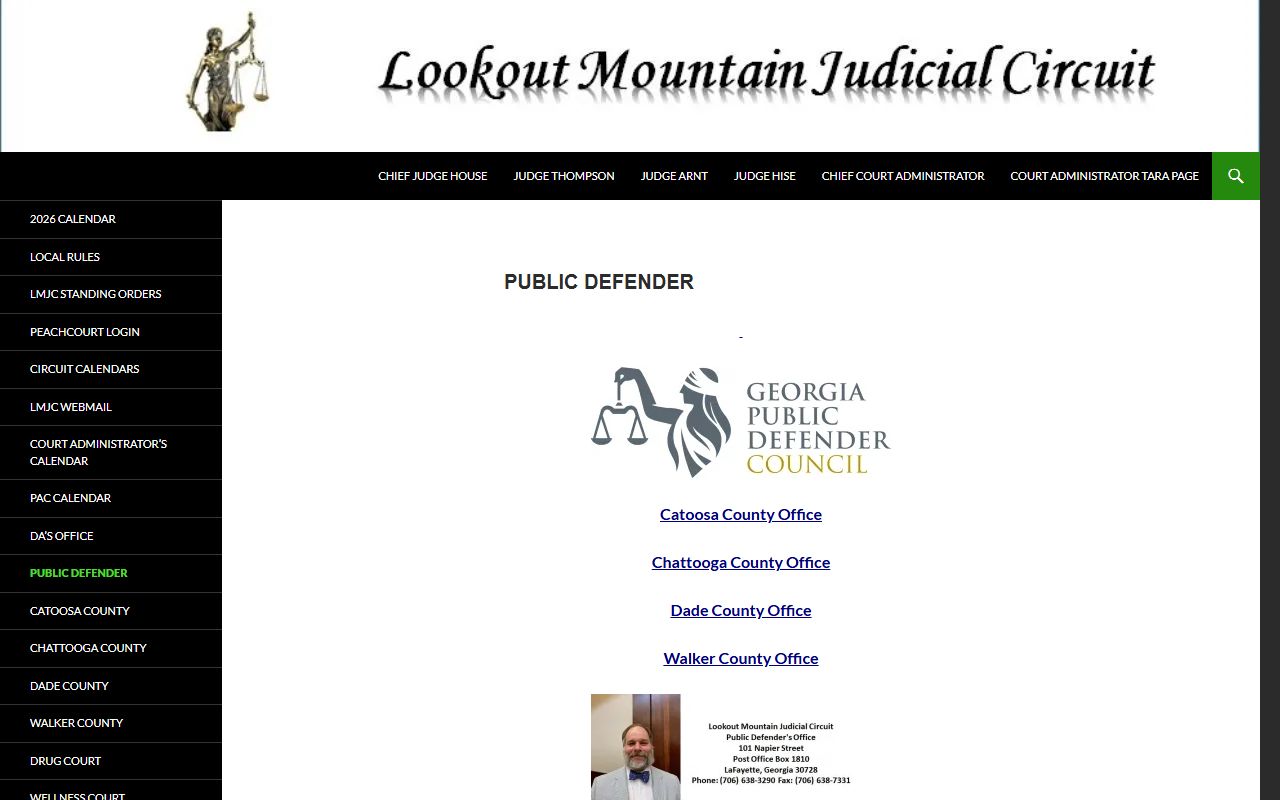
Defense counsel can help read charges, bond terms, arraignment dates, plea offers, sentence language, and eligibility for record restriction.
Chattooga County Criminal Access Channels
Every access channel has a different role. The clerk keeps the court file. PeachCourt is the online provider channel when the case or document is available. LMJC calendars help confirm scheduled court activity. Magistrate Court handles warrant and preliminary-hearing matters. The sheriff and jail handle custody, booking, and exact bond questions. The District Attorney handles prosecution-side questions. The Public Defender handles qualifying defense representation and interpretation of a pending case for eligible clients.
Clerk of Superior Court
10035 Commerce Street
Summerville, GA 30747
706-857-0706
8:30 a.m. to 5:00 p.m. Monday-Friday
District Attorney
114 E. Patton Street, P.O. Box 1025
LaFayette, GA 30728
706-638-2121
lmjcda@pacga.org
Public Defender
10035 Commerce Street
Summerville, GA 30747
706-857-9243
Fax 706-857-9218
For federal criminal cases, Chattooga County falls in the U.S. District Court for the Northern District of Georgia, Rome Division. Federal records are separate from county records and are searched through CM/ECF and PACER, not the county clerk, unless a related state case also exists.
The Chattooga County Public Defender office page gives the local public defender contact point.
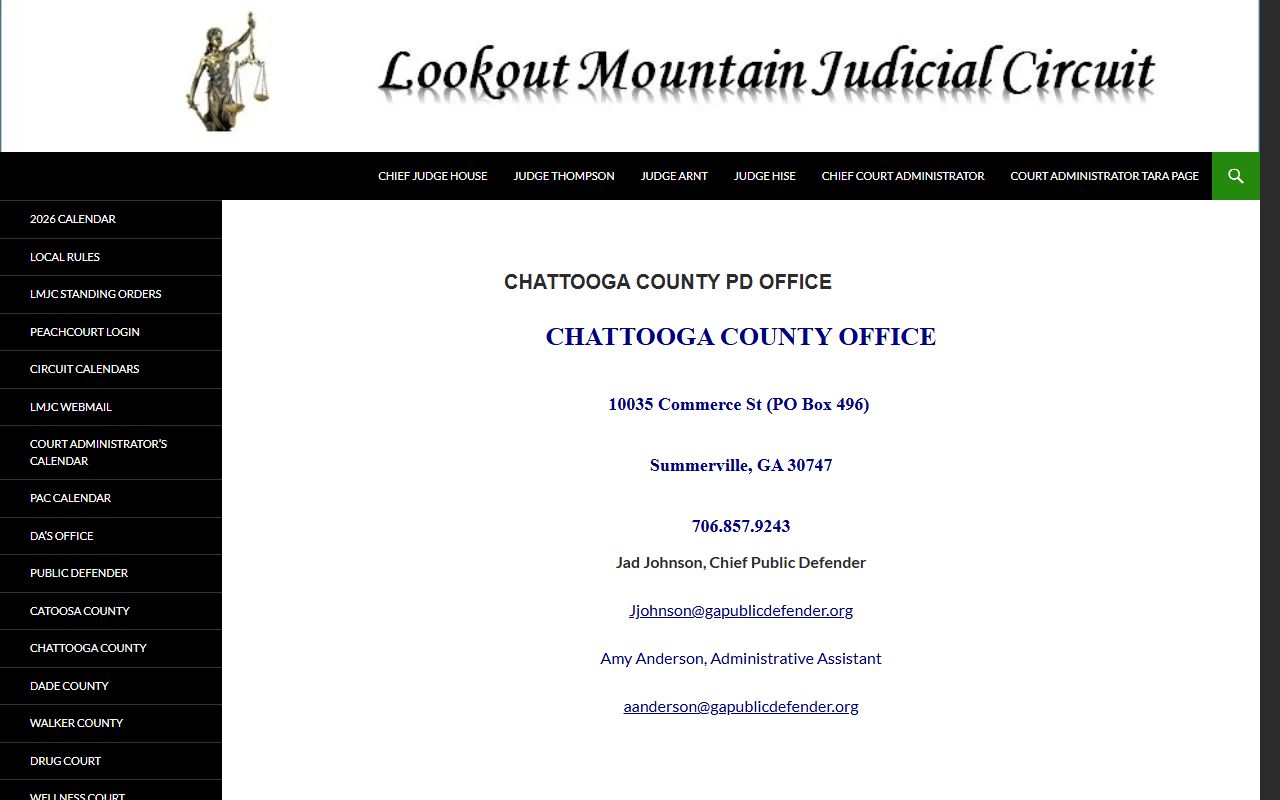
That local office is the researched contact for indigent-defense questions tied to Chattooga criminal case files.
Restricted Chattooga Criminal Records
Not every criminal court record is open in the same way. Juvenile delinquency and child-related records are restricted. Sealed cases may require a court order. Adoption and mental-health material are not ordinary public records. Court files may redact Social Security numbers, financial account numbers, full birth dates, minor names, victim data, medical information, and protected addresses. Military discharges are listed as a clerk service by GSCCCA and should not be assumed to be fully public online.
The Georgia Open Records Act, O.C.G.A. 50-18-70 through 50-18-74, is a fallback for administrative and law-enforcement records, with exemptions and fee rules described in the Georgia Attorney General Open Records Act publication. Court case files often require the court clerk's procedures instead of a general open-records request. For criminal history restriction, use the GBI record restrictions page and the prosecutor or arresting-agency path that applies to the arrest date.
Important: This website is not a consumer reporting agency, and criminal record data must be verified with the originating court or agency.
The Georgia Public Defender Council Chattooga office page confirms the public defender contact for the Lookout Mountain Circuit.
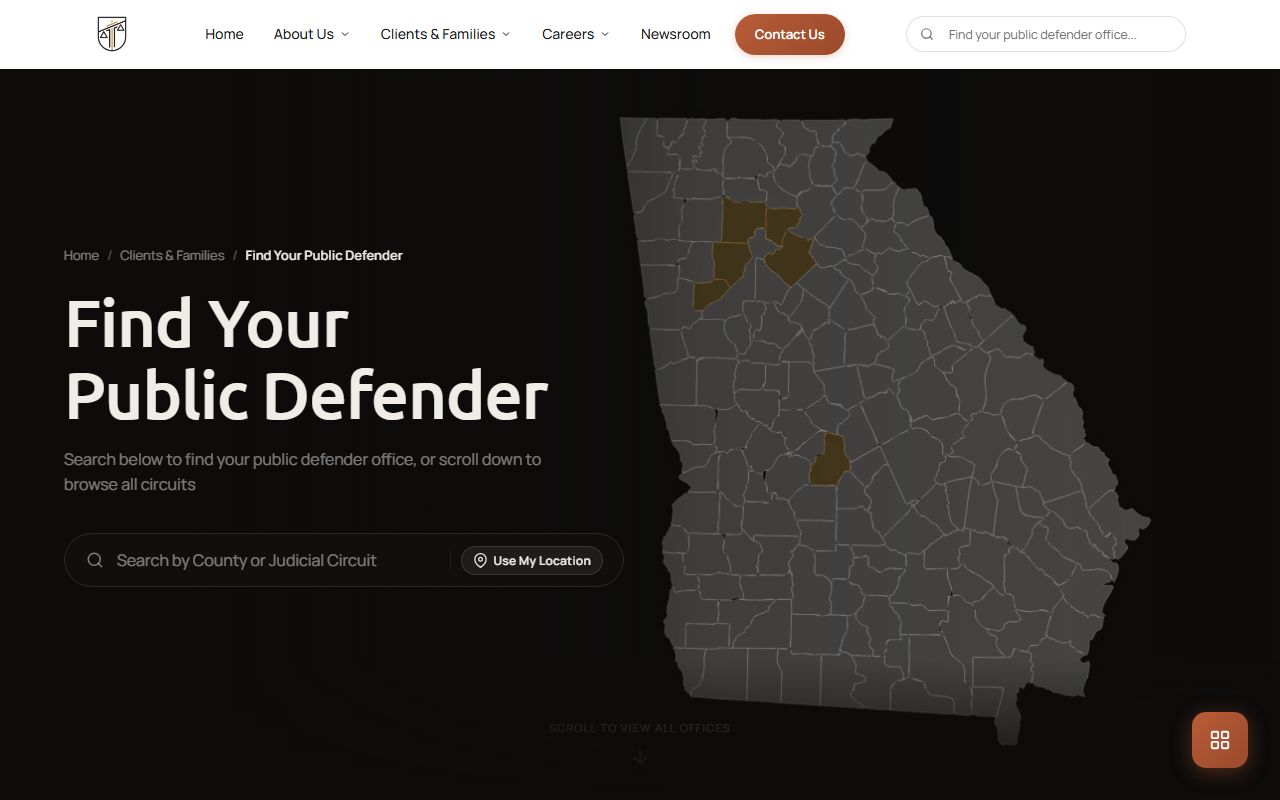
Use that state-level listing as a cross-check when local criminal court records point to appointed counsel or public defender contact information.